
Mamaroneck City Directory Collections
Here "city directory" is a catalog term. It is not a claim that Mamaroneck holds legal city status. The Town of Mamaroneck contains the Village of Larchmont. It also covers unincorporated Town land and a western slice of the Village of Mamaroneck. Titles reflect that patchwork. One volume may name a single village. Another spans several nearby places or a wider area instead of the present Town. Whatever the lead, search it by the exact place name and year printed on the item.
| Collection | Years | Where Held | Access |
|---|---|---|---|
| Turner-style area-directory leads | 1885-86, 1890-91, 1898-99, 1900-01, 1902-03, 1908-09, 1910-11 | NYSL, FamilySearch, and catalog leads | Confirm title, publisher, and shelf before relying on a run |
| Mamaroneck city-directory leads | 1927-28 and 1930-31 | NYSL and catalog leads | Holding details need confirmation |
| Town and Village records on microfilm | Through 1993 | New York State Library, per the NYG&B guide | On-site or library access; reel list not verified |
| Westchester-Putnam-Greenwich telephone directory | Publication year needs title-page confirmation | Library of Congress scan | Read the scan page by page |
No complete online Mamaroneck run exists. A missing year may reflect a catalog gap. It may also point to a different municipal heading, or a volume that was never indexed. The NYG&B Westchester guide is the best stated route to Town and Village microfilm. For any single item, the library catalog record settles it. Microfilm and shelves still answer questions that indexes cannot. Note: Record the title page, municipality, publication year, and page number before copying any directory entry into a family-research log.
Mamaroneck Directory Titles
A directory title is part of the evidence. A combined Mamaroneck, Larchmont, Harrison, and Rye buyers' guide can place a name near the Town. It can do so without showing a Town address. The same holds for a Larchmont directory. So does a telephone book headed by a postal locality. Keep the printed heading exactly as it appears. Then compare the street and number against the legal municipality in the year being researched. Difficult surnames deserve several search forms. Try the full surname, surname plus initial, a spouse or child name. Also try the street number in a surviving reverse volume. The Mamaroneck Historical Society books collection is especially useful for historic street-name leads. A changed street form can explain why a plausible household appears under a different heading.
Mamaroneck Directory Research Room
The Mamaroneck Public Library makes a practical first stop. The NYG&B guide places the Mamaroneck Historical Society in its Historical Research Room. Ask for the year band and the exact format. That might be an ordinary city directory, a reverse or criss-cross directory, or a telephone book, or it might be a yearbook, obituary index, Daily Times microfilm, or Town and Village records on NYSL microfilm. That request beats a broad modern name search. The library's institutional history records its location and growth.

The library image points back to the building itself. Confirm at the desk or on microfilm what the published history leaves out, since it does not inventory every directory or reel.
Reading Mamaroneck Directory Entries
One Library of Congress telephone-directory scan shows what a local listing can contain. Entries sit under Mamaroneck and Larchmont headings. Each may show a personal or business name. A street address and a telephone exchange and number may follow. A b notation marks business service. The scan does not prove every household member was listed, and its exact publication year comes from its title page before citation.
| Heading | The locality used by the volume, such as Mamaroneck or Larchmont |
|---|---|
| Name line | A surname and given name, or a business name, as printed |
| Street line | The address clue used to compare directories, census schedules, maps, and deeds |
| Telephone line | The exchange and number printed for that service |
| Service mark | A mark such as b, meaning business service in the scanned directory |
- Criss-cross directory
- An address-first volume that can help turn a known historical street number into an occupant lead. Not every ordinary directory has one.
- Householder index
- An index organized around the listed household name. Its scope depends on the publisher and year.
- Abbreviation key
- The volume's own explanation of short forms. Save it with the entry because meanings can vary by publication.
The digitized telephone directory supplies the source for this entry inventory. The local-history image pairs with the Mamaroneck Historical Society books page.
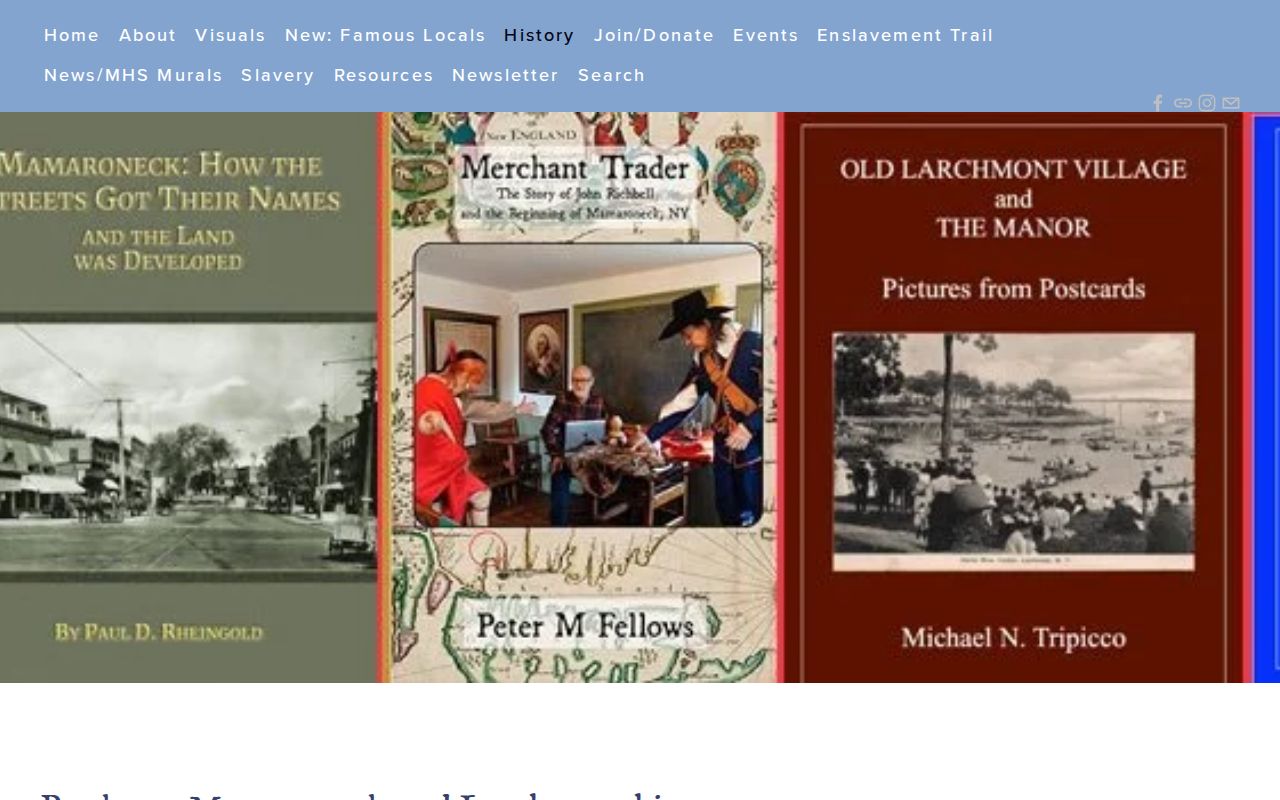
Old addresses rarely explain themselves. Street-name books, maps, cemetery context, oral histories, and local-history volumes at the Historical Society can clarify a printed address without turning an old listing into a present-day identification.
Mamaroneck Directories and Newspapers
A directory pairs best with a dated source. The Library of Congress catalogs the Mamaroneck Daily Times for 1925 through 1998. The Mamaroneck-Larchmont Publishing Company published it. Search the years around a household's last directory appearance. Obituary notices, weddings, probate notices, civic appointments, club notices, and address changes often surface there. Newspaper indexing is uneven. So a notice needs a second record before it settles an identity question. The New York State Library newspaper microfilm entry opens a route to Westchester and Mamaroneck newspaper resources.
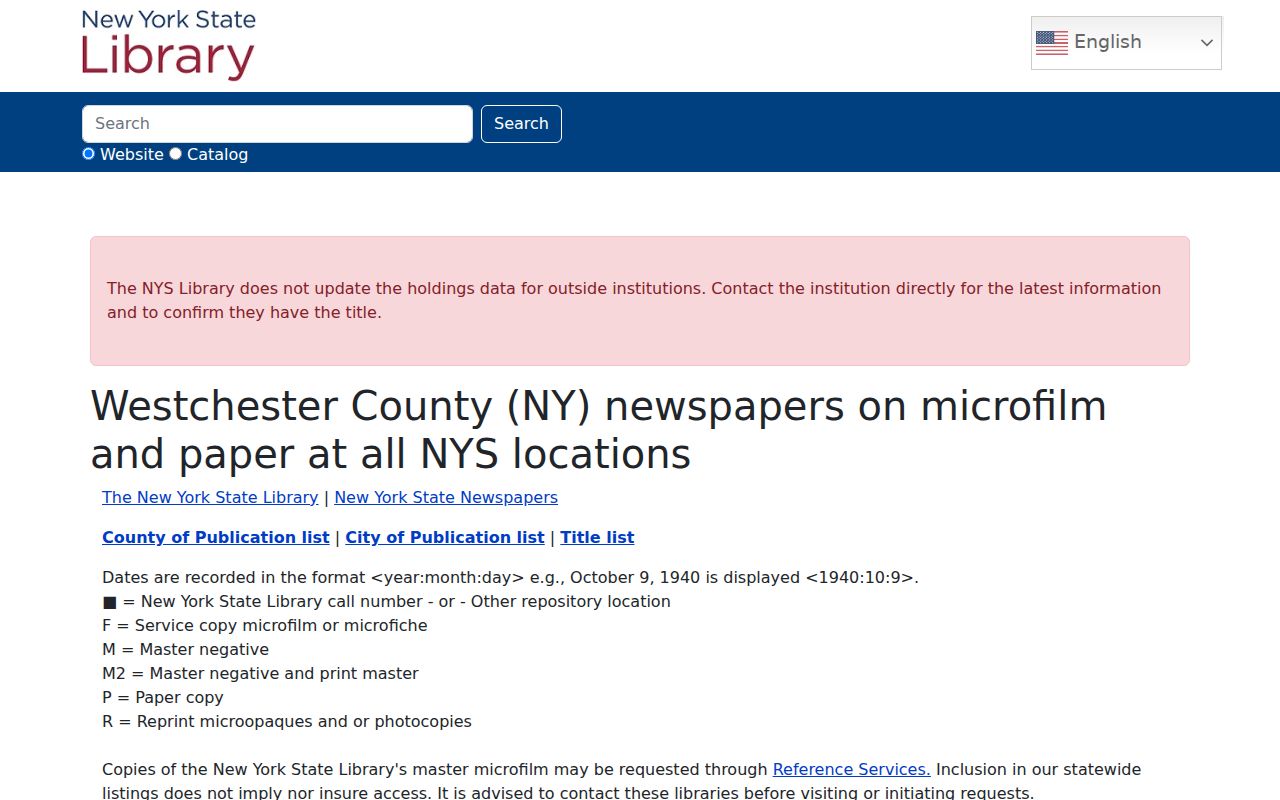
Newspaper microfilm complements a Mamaroneck city directory entry well. It supplies date-specific notices that can explain a move, a death, a probate event, or a local affiliation.
Mamaroneck Directory Timeline
The surviving research trail is layered rather than continuous. Catalog and repository leads cluster in distinct eras, not every year. Town-government history also needs separating from records history. Local commemorative material uses 1661 for a colonial purchase, while the Town government itself was created in 1788.
- 1881: New York vital registration outside New York City begins, creating a separate state-level index trail.
- 1885-1911: Catalog leads identify several Turner-style area directories for the Mamaroneck area.
- 1925-1998: The Daily Times catalog run supplies a newspaper companion for the printed-directory era.
- 1927-1931: Catalog leads identify Mamaroneck city-directory editions for 1927-28 and 1930-31.
- Through 1993: NYG&B identifies Town and Village records on NYSL microfilm.
No first or last local directory year is established. Nor is a publisher change or complete holding shelf. Treat the listed dates as discovery points, then have the repository confirm the exact item.
Mamaroneck Directory Map Clues
Maps and directories answer different questions. The Library of Congress holds a six-sheet Mamaroneck Sanborn set dated November 1896. That single moment froze the street layout, building footprints, uses, and materials on paper. It cannot prove anyone lived there. What it can do is test an address. Check the map's street label against the printed directory entry. Hold onto any doubt when the modern street looks different. A footprint gives physical context only, never a household or an owner. The Library of Congress Sanborn map set works best next to Mamaroneck Historical Society street-origin research. It also pairs well with later County aerial layers. County imagery offers checkpoints for 1947, 1960, 1976, 1990, 2000, 2004, 2007, 2009, 2010, 2011, 2013, 2016, and 2018. A building or number may simply refuse to line up. Before calling it an address change, compare adjoining parcels, the map sheet, and the directory's locality heading. This pays off most at the Town, Village of Mamaroneck, and Village of Larchmont boundaries. There a postal label stays familiar while the legal record series shifts underneath it. The map and the printed title point you to the right repository. The dated directory page still carries the historical listing itself.
Tracing Mamaroneck Directories
Work one household at a time. Open with a name plus a dated volume, and never assume that a shared surname means a shared family. Record every printed address, name variant, abbreviation, and telephone clue as the book gives it. Then pull the previous and following directory and compare. A reverse directory helps only if that volume actually includes such a section. This discipline keeps each historical entry in its own era and stops owners, occupants, and relatives from blurring into one person.
- Find the first located entry and copy its title, year, page, locality heading, spelling, and address exactly.
- Check the prior and following directory editions for a move, a changed initial, or a new household notation.
- Ask for a reverse or criss-cross volume for the address and year, then log whether one was actually available.
- Pair the directory period with the 1900, 1910, 1920, 1930, 1940, or 1950 federal census, comparing household members, street, and nearby households.
- Use the Daily Times, cemetery context, probate, deed, or permit evidence to test an apparent endpoint.
Federal census geography rarely matches today's Town and Village lines. A household that vanishes from a book may have moved, died, married, or been skipped. It may simply have landed under a different locality heading. The gap is rarely proof of anything. A historical lead may need a modern follow-up. Use the separate Mamaroneck resident lookup routes instead of stretching an old listing toward the present.
Note: Keep a negative-result column, because a missing name may just mean an unindexed volume or a different municipal title, not a proven absence.
Mamaroneck Directory Gaps
Old directories were never a census. The Mamaroneck materials simply do not back the claim that every resident appears in print. People get omitted. Names get abbreviated. Streets carry older forms. A postal or village heading may not match a modern boundary at all. The Local History route, NYSL microfilm, Historical Society collections, cemetery sources, and newspapers each cover different ground. Each has different scope as well.
When a book or entry is missing, ask for the original volume. Try an adjacent year, a telephone book, or the Daily Times microfilm. Town or Village records on NYSL microfilm can help too, or street-name help from the Historical Society. Resist the urge to invent. No fabricated publication dates, shelf locations, or relationships drawn from a similar name. A source note that admits the gap beats a polished family connection with nothing under it.